Going to Advanced Educator Space Academy 2007
Stay tuned for a whole new blog chronicling this new adventure but until then, read on to learn about my time at the Educator Space Academy last summer...
In the summer of 2006 I was fortunate enough to be chosen by Honeywell to be one of 200 middle school science and math teachers from 19 countries to attend the Educator Space Academy at the U.S. Space and Rocket Center in Huntsville, Alabama. Here are the highlights of that experience...
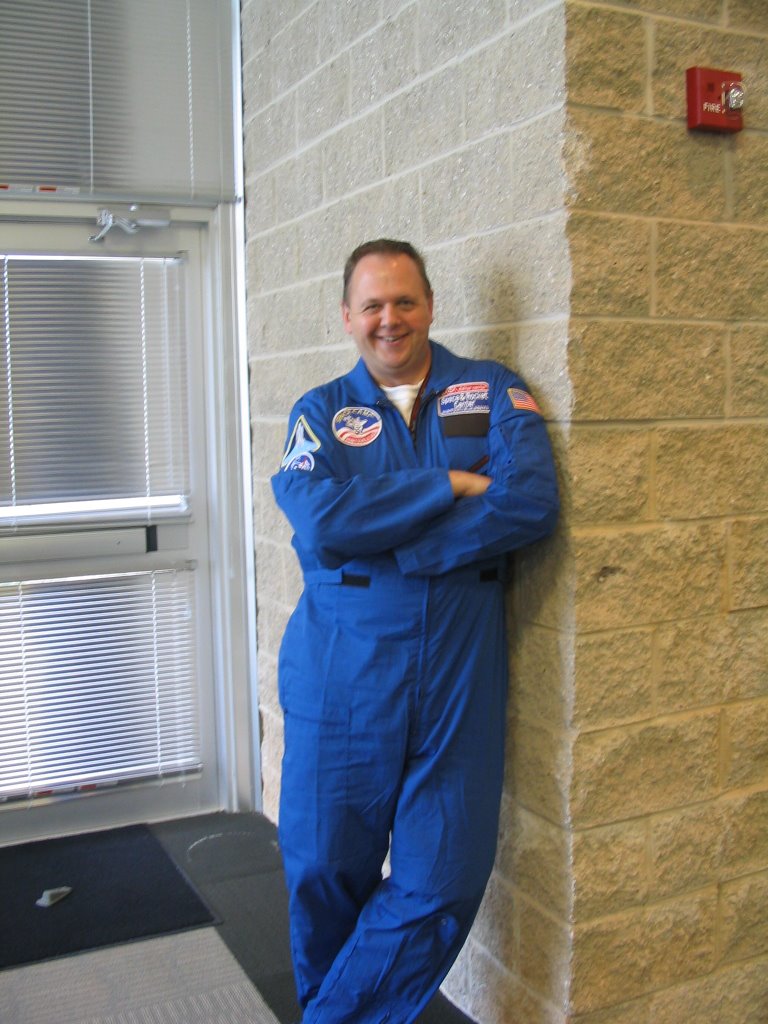
My name is Paul Strauss and I am an 8th grade Science teacher at Sunset Ridge School in the Deer Valley Unified School District in Phoenix, Arizona. With this site I hope to share just how incridible it was for me to attend the Educator Space Academy in Huntsville, Alabama at the U.S. Space & Rocket Center this past summer. Never before have I experienced such a melding of personal fun and professional development all rolled up in one.
Well it was one thing to be selected but then I was blown away realizing that this would truly be an international experience (click here for a map to see where all the teachers came from). The most interesting thing about spending a week with teachers from all over the world is that I was amazed that even though we all came from so many different cultures and customs, we all go through EXACTLY the same things in the classroom. Being a middle school teacher in Phoenix is pretty much the same as being one in Honduras, Ireland, Newfoundland, India, etc. But to make things more manageable, we were broken down into groups of 15-17, each with an international flair, with my group being Team Exploration (seen in this picture) - and I could not have asked for a better group!
Naturally when you think of Space Camp you think of astronaut training (well if you are product of the 80's you probably first think of that cheesey movie "Space Camp" with Kate Capshaw and Lea Thompson which will then lead you back to thinking about astronaut training). This time was basically like playing at Disneyland and really gave us an appreciation in just how wild it must be to go throught training for the real thing. Even though all the teachers there came from different backgrounds and athletic abilities, it was almost like watching a bunch of kids running around an FAO Schwarz toy store.
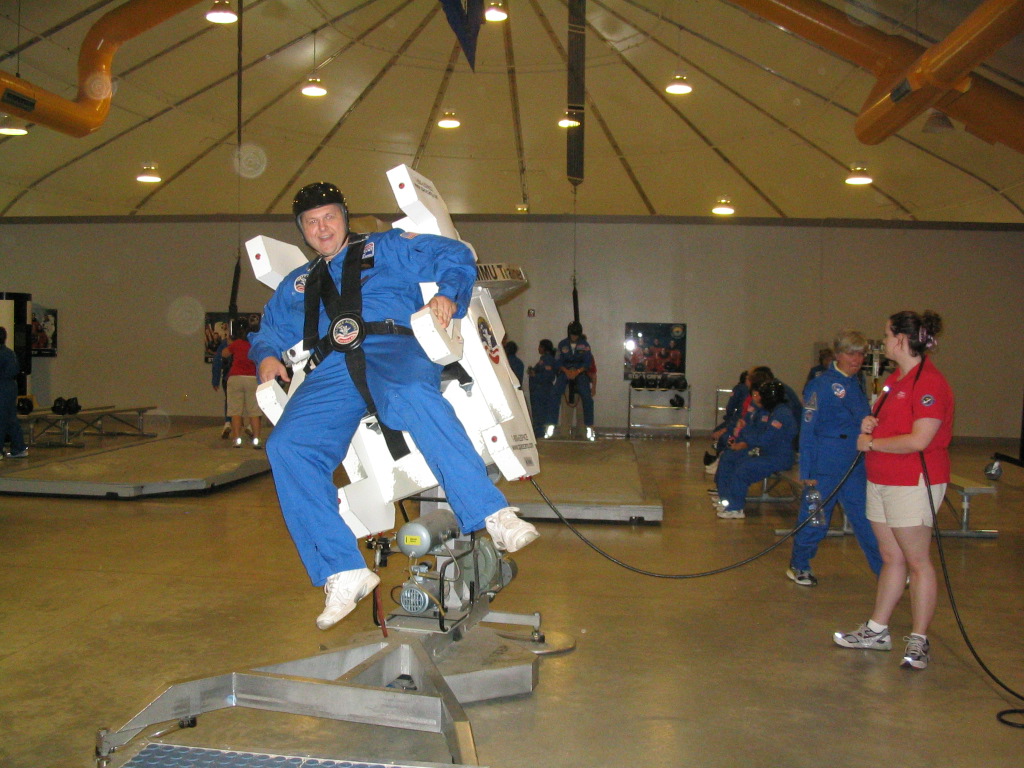
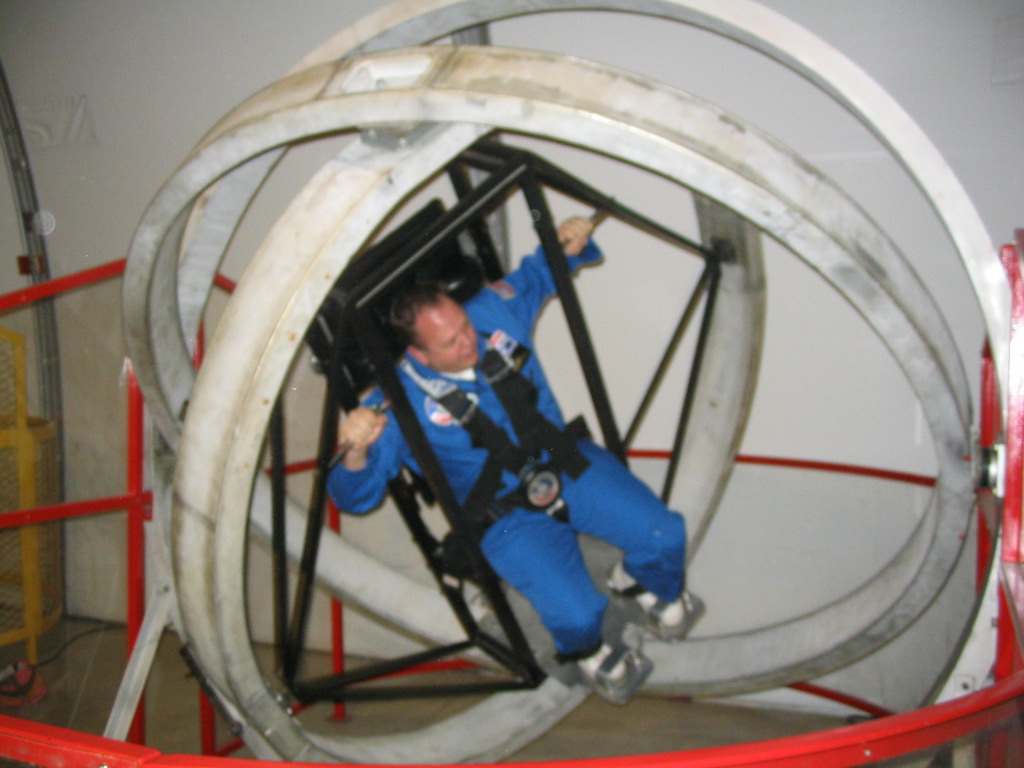
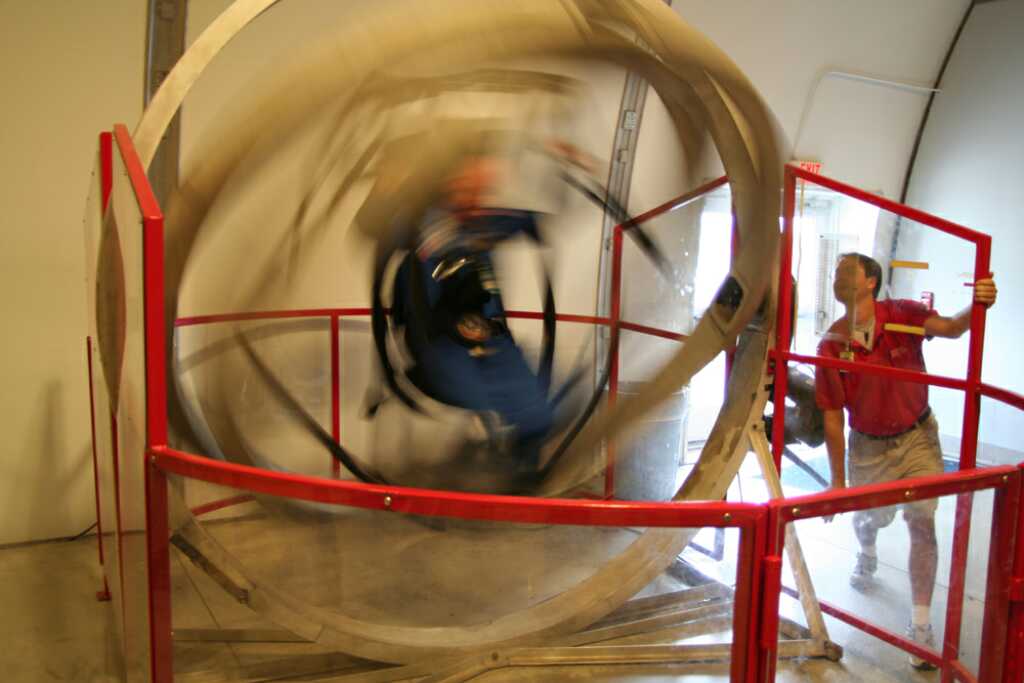
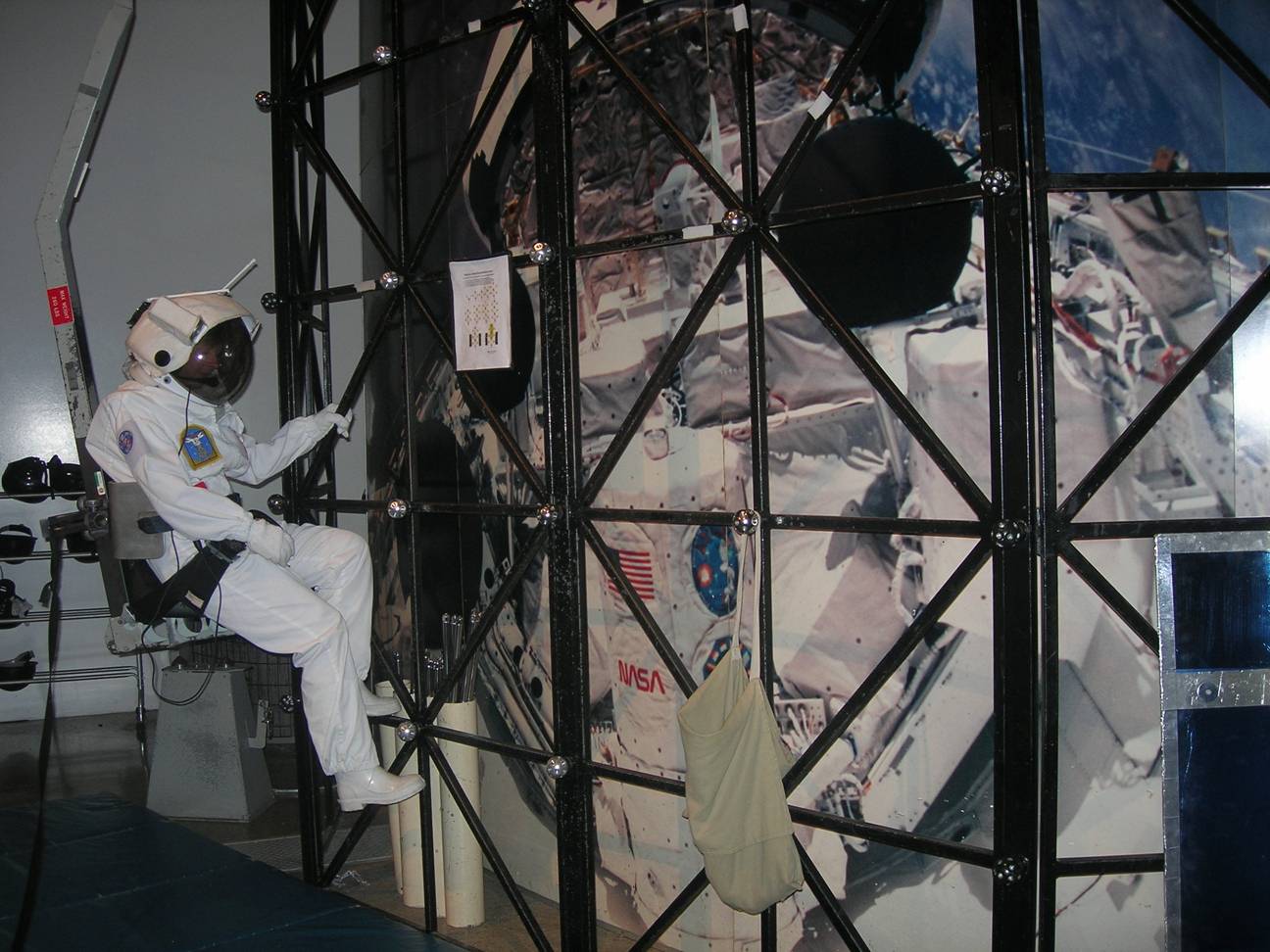
Well the first step was to head into the Astro Trek building and hit the simulators. The most fun had to be the "multi-axis trainer" (or as we liked to call them the "vomit ball" - just take a look at the pics below and you will see why). Then for the ultimate weight ego boost, there is the 1/6th chair which simulates what it would be like to be on the moon with only 1/6th the gravity of earth. Finally we hit the MMU chair which simulates the propulsion unit that can be used on EVAs (extra-vehicular activities or commonly known as "space walks"). This whole chair unit is actually suspended on a cushion of air so you are basically a giant air-hockey puck!


In the first mission I was in MOCR (mission operation control room) where I played the part of CAPCOM - the person that is the main point of contact between mission control and the orbiter. We all had VERY detailed scripts to follow that covered literally a minute-by-minute layout of a real shuttle mission. In the second mission I was "Payload Specialist 1" which meant that during take off I am strapped into the "mid deck" and once in orbit the other PS and I conducted experiments (we actually made things like Flubber and other basic chemistry experiments)
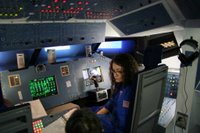
Now when I said that it was a minute-by-minute script, I really meant it. I was amazed at the amount of detail and steps that the orbiter's Comander and Pilot had to go through. They had to complete an extensive checklist of flipping switches that I have to believe closely mirrors the real thing. I would have to say that my only disappointment was that I did not get to do a "space walk". True the space suit was like something you would wear to a Halloween party but it would have been wicked cool to be harnessed up and flying through the room. But as we learned, in NASA, there are no small parts to be played in a mission!

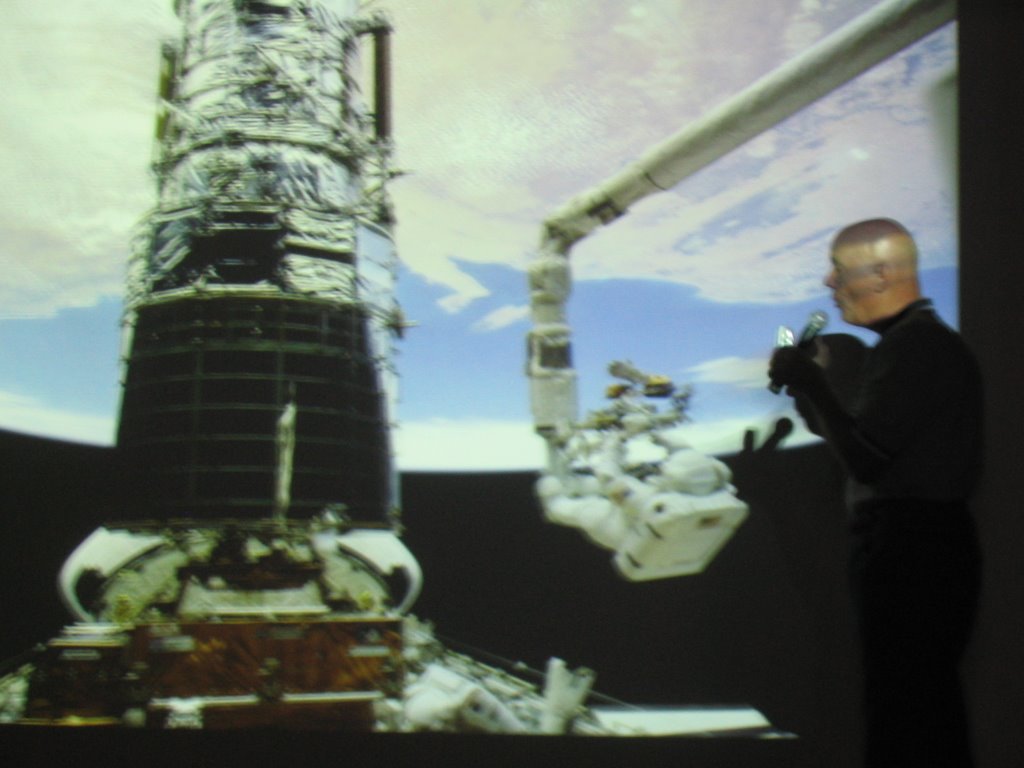
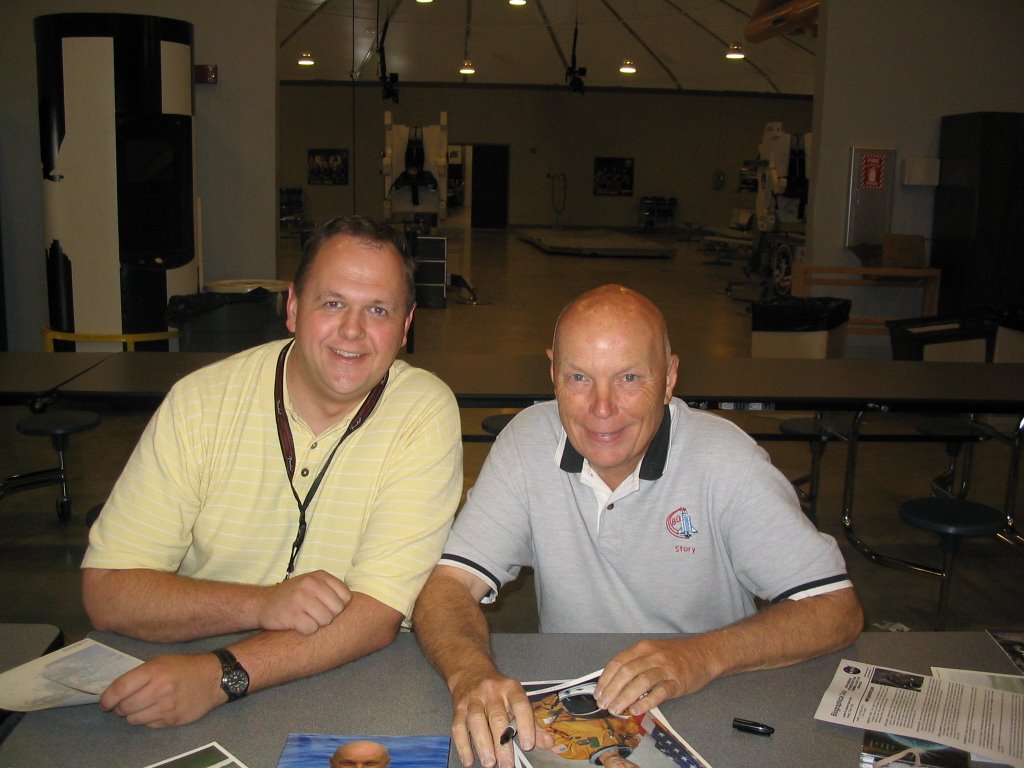
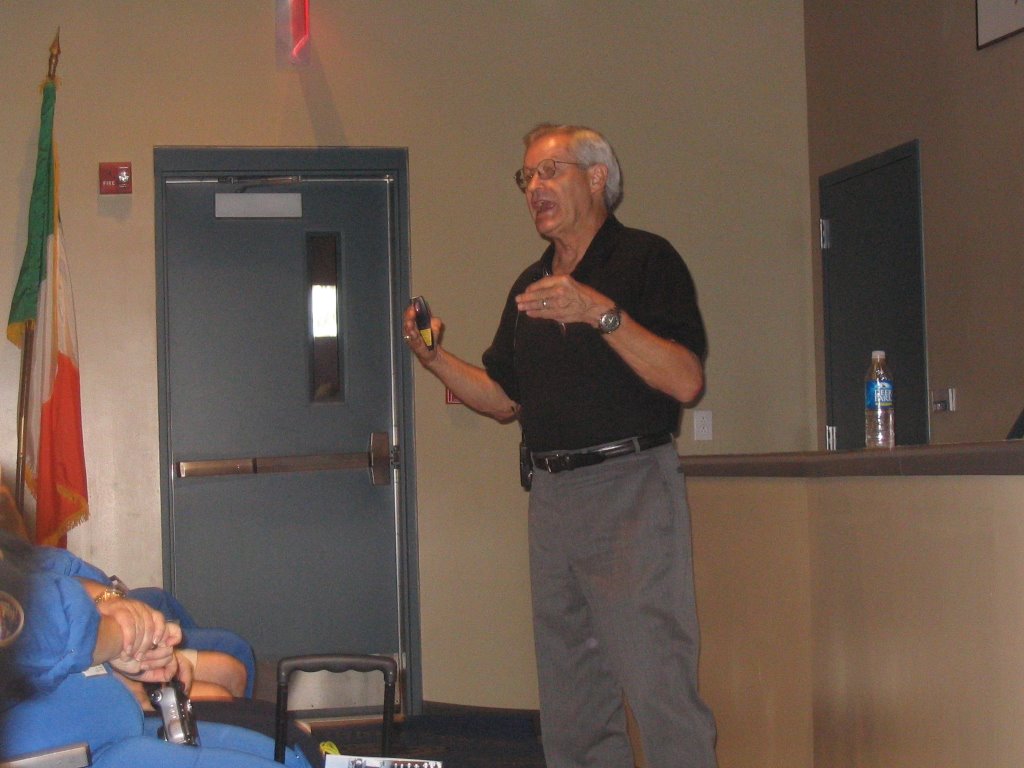
Throughtout the week we also were honored to have some incedible people of space history come and talk to us. On the first day Story Musgrave, a six time shuttle astronaut, came to speak to us about his experiences working with the Hubble telescope and really putting the vastness of space into perspective. In the picture above he is talking about one of his mission and he is actually the astronaut in the picture! It is amazing how passionate he is about his life and what he has done. It was obvious that he has not taken his experiences for granted.
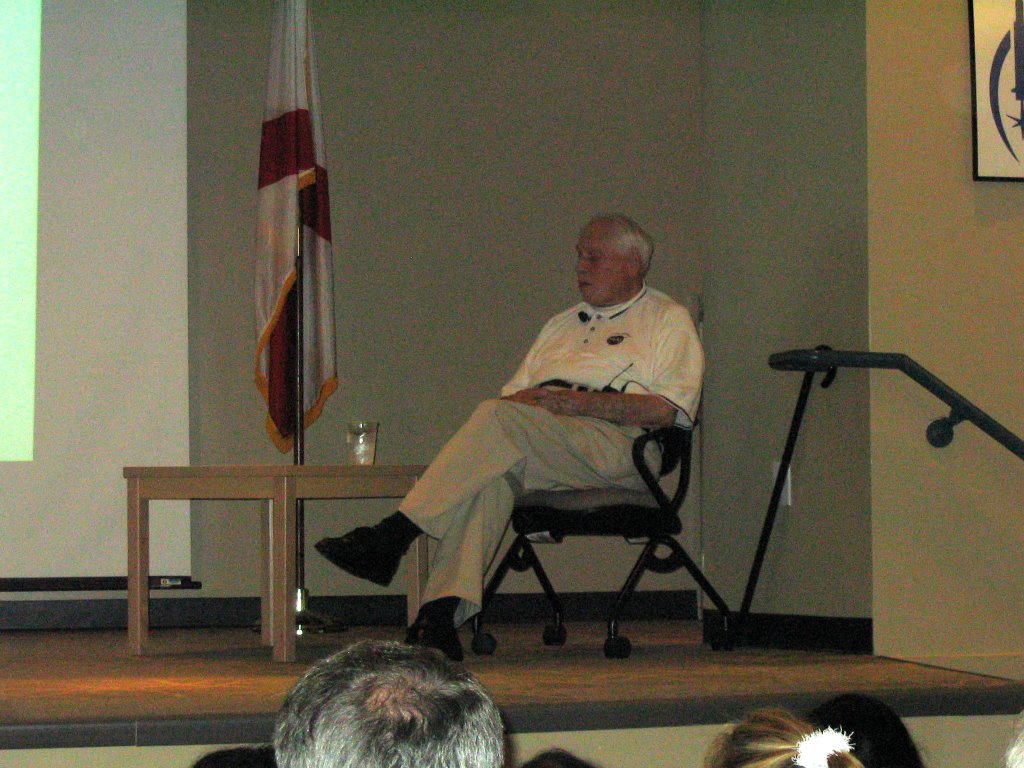
In the early 1950s, Dr. Wernher von Braun - credited as being the "father" of the US rocket program - left Germany with a team over 100 true "rocket scientists" and together they created from scratch the rockets which eventually lead to our being able to leave earth's orbit. Well one of those German scientists, Konrad Dannenberg, still lives in Huntsville and at 92 years of age, came to speak to us about what in essence was the start of our space program. It is one thing to read about history, but it is something totally different to hear about it first hand!
And then on the last day we were honored by hearing from one of the key chroniclers of the space program, Ed Buckbee. The very first astronauts were a group of seven fighter jocks - Alan Shepard, John Glenn, Scott Carpenter, Wally Schirra, Gordon Cooper, Deke Slayton and Gus Grissom - and they made up the Mercury Program. Well Ed Buckbee was in essense the PR guy who had to promote this brand new space program to the public. Over a 30 year career with NASA he has really been a part of the entire process and during his talk he shared many stories from behind the scenes. But what really hit home for all of us was the fact that it was Ed who actually created Space Camp. If it was not for him, I would not have had the experience that I had - THANK YOU ED!
Twenty-two years later it was decided to have a special program specifically designed for teachers so they would be able to bring lessons and passion for the space program back to their classrooms all over the world and so the Educator Space Academy started up in 2004. Besides all the guest speakers and astronaut training, we spent several hours in classrooms doing actual hands-on activities that we can recreate for our students. We came home with an unbelievable amount of lesson plans and projects.
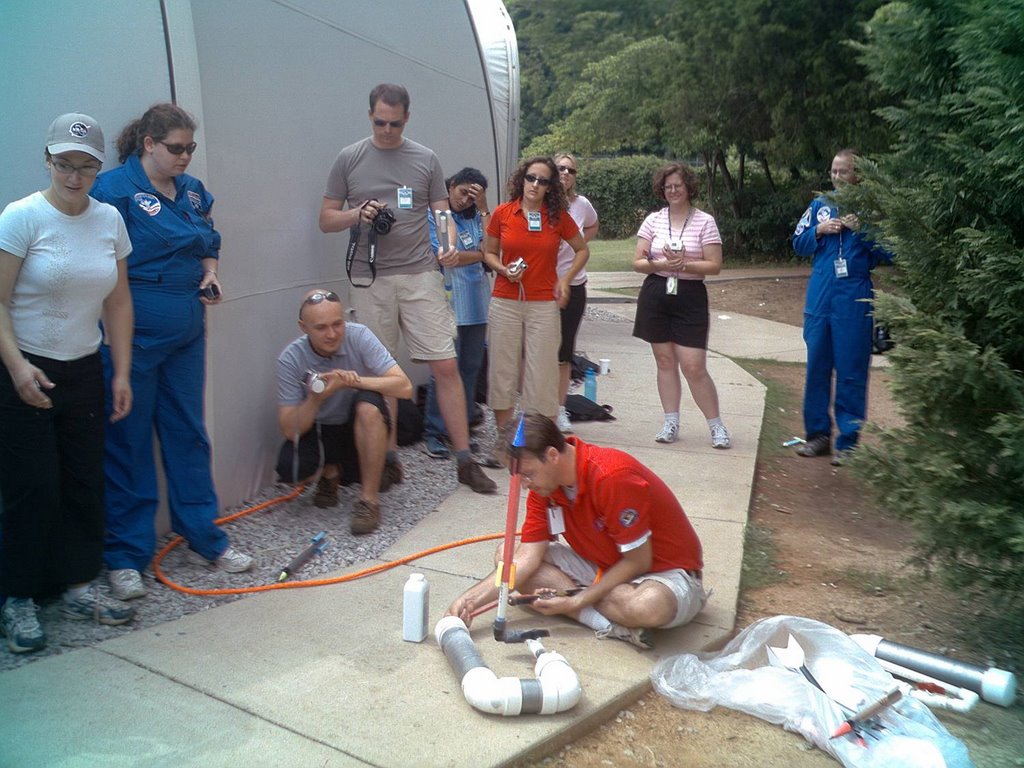
Throughout the week we learned about the symbolism of creating mission patches, understanding the impact of geography on society, we developed a water filtration system, we learned how to build air balloons, we designed and tested water, air and model rockets, we learned innovative and interactive math activities and we also learned the secrets of hydroponics. All of these classes were taught by real teachers who work at Space Camp so they know the types of obstacles we face in the classroom which is very helpful.
By using space as an exciting anchor, we can hopefully inspire more mathematicians and scientists. As was mentioned several times, it is today's 7th and 8th graders who will be the ones actually walking on Mars. And whereas more than likely we will never get out into space, as teachers we at least have the ability to inspire the future stars of the space program.

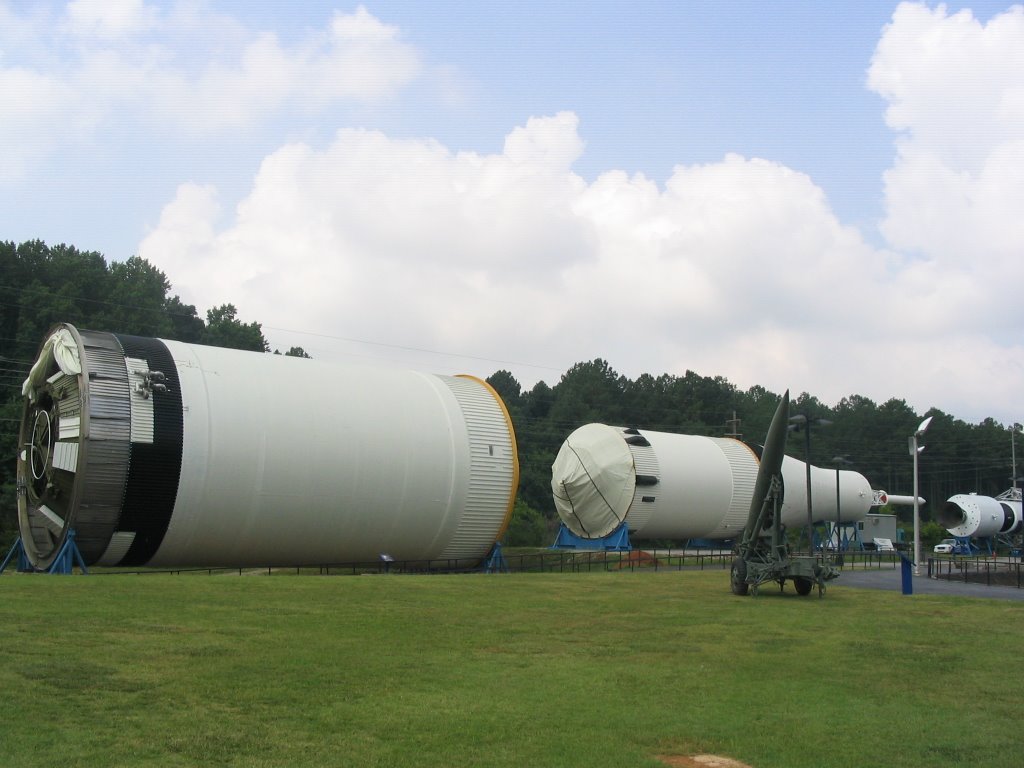
One of the main cornerstones of the center is the actual Pathfinder orbiter [above]. The Pathfinder was in essence a full size model that NASA used to prepare places like Kennedy Space Center assembly building and launch pads for the new shuttle program. Up to this point everything was built around the Saturn V program and so had to be refitted. Which also makes it appropriate that this center also has an actual Saturn V rocket on display in the Rocket Park [here to the right laying on its side broken out in the three different stages of launch]. And besides these two inspirational pieces visitors can trace the entire evolution of rocketry from the early formation through the shuttle program.
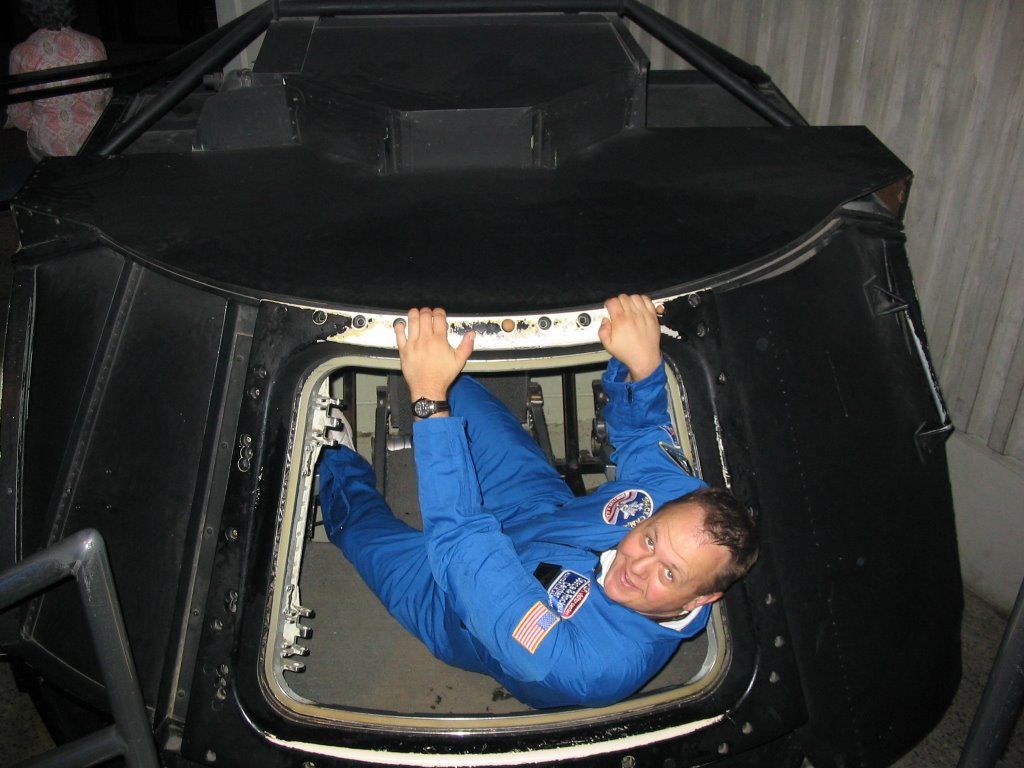
Inside of the center visitors will also find a very impressive museum that houses the actual Apollo 16 command module. And besides the Apollo program, there are also capsules from the Mercury and Gemini programs along with the trainers that the astronauts used some of which we were even able to crawl into. Anybody can read about the space program but through the power of museums like these, you can actually feel like you are apart of it.
We stayed at the University of Alabama-Huntsville dorm which is only a couple of miles away from the center. Now if you can remember back to your dorm life you will remember how absolutely uncomfortable the beds are so sleeping was kind of rare. The nice thing is that we got individual rooms and you share a bathroom with one other person and then there is a sitting room you share with 2 other people for the whole suite which even had a refrigerator and microwave
And I have to give thanks to the company that made this all possible - the great people at Honeywell. This is only the 3rd year of the Educator Space Academy and Honeywell has been a big part of its success. And the great thing is that the funding of this scholarship is actually by the Honeywell employees and the Hometown Solutions Program. Because of the generosity of these individuals, literally tens of thousands of students from around the world have the potential of being exposed to the wonders of the universe.